Canada AI Speed Cameras Could Bring Fines Up to $1,500 With the state-wide deployment of artificial intelligence-powered speed cameras, drivers in Canada are ushering in a new phase of traffic policing. These sophisticated devices, which deliver fines of up to $1,500 for major rushing violations, are changing outdate enforcement techniques.
There has been a significant change within the monitoring and enforcement of traffic laws with the introduction of AI pace cameras. Authorities want to reduce risky driving habits, increase road safety, and update enforcement procedures by using automated detection and real-time data analysis. This page explains how AI speed cameras work, where they are installed, how fines are determined, and what drivers need to know to avoid costly fines.
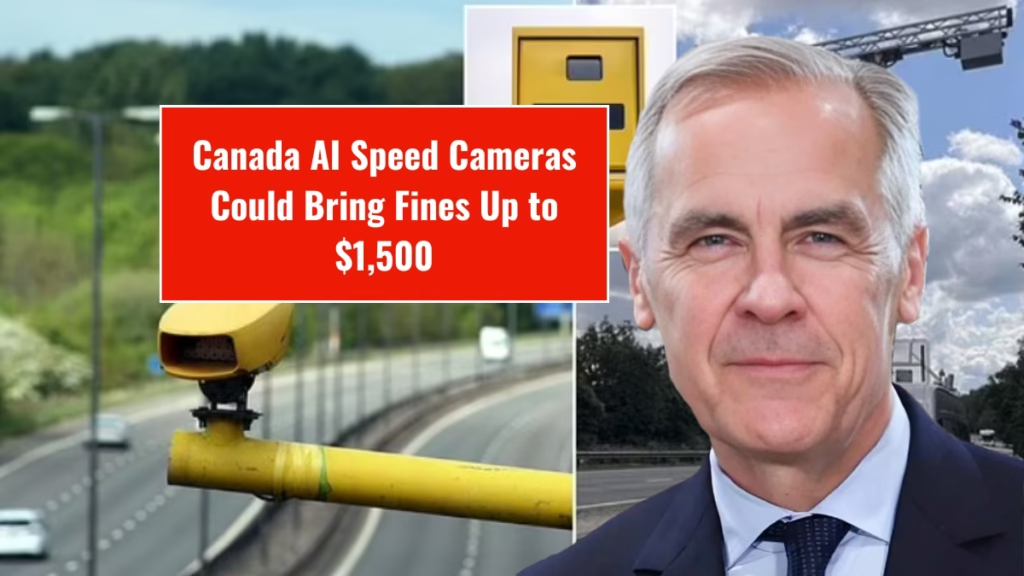
Canada Adopts AI Speed Cameras
Limitations of outdate speed laws: Police presence, radar guns, and fixed cameras with limited capabilities were the mainstays of speed enforcement for decades. These systems were often restricted to specific places and times, and thus required a large workforce. As traffic volumes accelerated and driving habits advanced, these conventional techniques were not able to meet the demands of enforcement, resulting in gaps in insurance and uniformity.
Campaign for more intelligent road safety solutions: Rising accident rates in high-danger areas, inclusive of city intersections, creation corridors and school zones, induced governments to are seeking for extra practical solutions. AI-based speed cameras are a desirable option for contemporary traffic control as they provide continuous monitoring, quick processing and increased accuracy.
Operation of Canada AI Speed Cameras
Real-time analytics and artificial intelligence: AI speed cameras use artificial intelligence software and high-resolution images to identify cars going faster than the posted speed limit. AI systems, unlike earlier cameras, are capable of traffic flow analysis, vehicle type discrimination and adapting to road conditions in real time. By reducing mistakes and increasing enforcement precision, this system guarantees accurate recording of violations.
Automated ticketing process: When a car is detected speeding, the system records evidence, such as photos and speed information. There is no need to stop traffic as tickets are automatically generated and given to the registered car owner.
AI Speed Cameras Locations
High traffic and risk areas: AI speed cameras are mostly being put in areas where there are significant safety issues, like:
- School area
- Area for construction
- Residential area
- Important urban routes
These are frequently the locations where speeding puts other vehicles, bikers, and pedestrians at the highest risk. Expansion across provinces and cities: Many jurisdictions are expanding automatic enforcement programs as part of more comprehensive road safety plans, even as the specifics of implementation range by using province and municipality. Drivers need to assume that AI pace cameras will proliferate in the future.
Drivers Warned of Up to $1,500 Fines
Maximum fine for serious violations: The most fine for primary rushing violations caught by way of AI cameras is $1,500. This commonly applies to conditions where there are repeated violations or excessive speeding that far exceeds the posted limit. Penalties may be less severe for lower-level speed violations, but as the speed and risk level increase, penalties become more severe.
Factors affecting the amount of fine: Driver fines can vary depending on several circumstances, such as:
- How far over the speed limit was the car going and in what type of area the violation occurred
- If the driver has a history of violations
- These elements are implemented regularly thanks to AI algorithms.
Reasons Behind the Adoption of AI Speed Cameras By Governments
Improved road safety results, as per studies: Automated speed enforcement can lessen accidents, injuries and deaths. Because of the constant presence of cameras, drivers are endorsed to pressure slowly, especially in areas where safety is of finest subject.
Effective use of resources: By eliminating the need for constant police monitoring, AI speed cameras free up law enforcement to focus on other vital duties. Long-term operating expenses are also reduced with the aid of automatic structures.
Data-driven traffic management: AI cameras gather beneficial details about traffic patterns, congestion and driver behaviour in addition to enforcement. Governments can use this information to higher plan infrastructure and create extra secure roadways.
Drivers’ Concerns & Criticism
Issues about privacy and surveillance: some drivers have expressed worries approximately privacy because of fear of multiplied surveillance. Officials have stressed that AI pace cameras are used simplest for traffic enforcement and are governed by way of strict information privacy rules and guidelines. Images are saved according to approved retention rules and are used for enforcement only.
Perception of revenue generation: Opponents argue that computerized enforcement prioritizes being profitable over increasing protection. In response, governments argue that fines work as a deterrent and the money collected is often used to finance road safety initiatives.
Impact of AI Speed Cameras On Regular Drivers
No warnings or discretion: Unlike traditional traffic stops AI camera does not provide warnings, Drivers can be fined even if they are not immediately aware of the violation because violations are logged automatically. Due to this, it is greater critical than ever to obey speed restrictions.
More desirable accountability: Drivers can’t anticipate warding off enforcement throughout off-height hours as AI cameras are continually on. Speed limits are constantly in place and are consistently enforced.
How To Prevent Costly AI Speed Camera Penalties?
Pay attention to speed limits: Especially in construction zones and school zones, speed limits are subject to everyday change. Inadvertent violations can be avoided by way of intently inspecting signage.
Use driver assistance devices wisely: Nowadays, many cars have navigation systems that show speed restrictions or speed alarms. By using these devices drivers can stay within the law.
Modify driving habits: Instead of situational compliance, AI enforcement promotes consistent, law-abiding driving. There are financial and safety benefits to slowing down.